😁 Teeth & Oral Health: What Eating Disorders Can Do to Your Smile
Your teeth are strong, but they’re not indestructible. Eating disorders like anorexia nervosa and bulimia nervosa can affect oral health because teeth and gums rely on nutrients, hydration, and balanced chemistry to stay healthy.
Let’s look closer:
🦷 How Anorexia Nervosa Affects Oral Health
Malnutrition can weaken tissues throughout the body — including gums and tooth enamel.
Common effects:
-
Gum sensitivity or bleeding
-
Weakened enamel
-
Mouth dryness from dehydration
-
Higher risk of cavities
🌊 How Bulimia Nervosa Affects Teeth
Frequent vomiting exposes teeth to stomach acid, which can erode enamel over time.
Possible effects:
-
Enamel erosion
-
Tooth sensitivity to hot or cold
-
Discolouration
-
Swollen salivary glands
⚠️ Acid damage can happen gradually and may not be noticeable until a dentist checks.
🧠 Important Reality Check
Dental changes aren’t cosmetic flaws — they’re medical signs that your body chemistry has been under strain.
🌱 The Hopeful Part
Dentists and healthcare teams can help repair and protect teeth, and stopping damaging behaviours can prevent further harm. Oral health often stabilises during recovery.
💬 Quirky but true takeaway:
Your teeth aren’t turning against you — they’re reacting to chemistry. Change the environment, and they usually calm down.
My Personal Experience of Teeth Problems
One of the well known physical effects of eating disorders that present with symptoms of self-induced vomiting, is the impact it has on the individuals’ teeth. The biggest contributor being the stomach acid in the vomit, that when regurgitated, comes in contact with the teeth as it passes through the mouth.
In addition to induced vomiting behaviours, the symptomatic restriction of foods and insufficient nutrition that present alongside certain eating disorders, can cause a person to experience a deficiency in nutrients. These deficiencies can also has a detrimental effect on teeth, a primary example being a lack of calcium that causes weakening of the teeth and gums, increasing the likelihood of tooth decay and breakages.
Fortunately, I was born with extremely robust teeth, to the point I was once told they were like “pure enamel,” by a childhood dentist. In contrast to the quality and strength of my teeth, they were far from perfect in an aesthetic sense because they were jagged, wonky, and almost too big for my mouth. Because of this I was given an early referral to the orthodontist, where I was fitted with braces at a very young age.
My orthodontic treatment was very successful and left my teeth immaculately straight. I was extremely proud of them, and became obsessed with keeping them perfect in every way. My obsession was so extreme that I insisted on wearing nighttime retainers for many years post treatment, and I lived in terror that these braces would break and I would not be able to source replacements.
Fortunately for me, on the occasions when my retainers did break, I reached out to my orthodontist for help and he kindly made me new ones, despite me being discharged from the service some years prior. He seemed impressed by my commitment to keep my teeth exactly how he shaped them, and saw how grateful I was for the near-on perfect smile he had gifted me.
Not only did my strict and thorough oral hygiene regime preserve my strong teeth, but my body adapted to my eating disorder behaviours where it became accustomed to my purging. My body adjusted so much that there became a delay in the release of stomach acid to break down any food I consumed. This would certainly explain why, over time, my sick stopped having that putrid vomit taste and odour. I am convinced this was another primary factor in sparing my teeth from severe acid erosion, and pushed back the need for treatment for as long as it did.
Despite my efforts to preserve my teeth, and my body adjusting to my continuous vomiting, I was never going to get away with keeping my immaculate teeth forever. How could I when I had spent years dedicating my life to anorexia and bulimia, wasting so much time engaging in degrading, destructive behaviours that posed a risk to my health? I’d be kidding myself to think any different.
It was not just stomach acid and malnutrition that was affecting my teeth, but my consumption of sweet and acidic foods during binges played a key part in my ever-declining teeth. Additionally, I went through prolonged periods of time where I did not brush my teeth because I was depressed and lacked the energy and motivation to get up off the bed and walk the few meters to the bathroom. I hated myself for it, but I was unable to make a change due to my crippling depressive state.
My First Dental Procedure for Decay
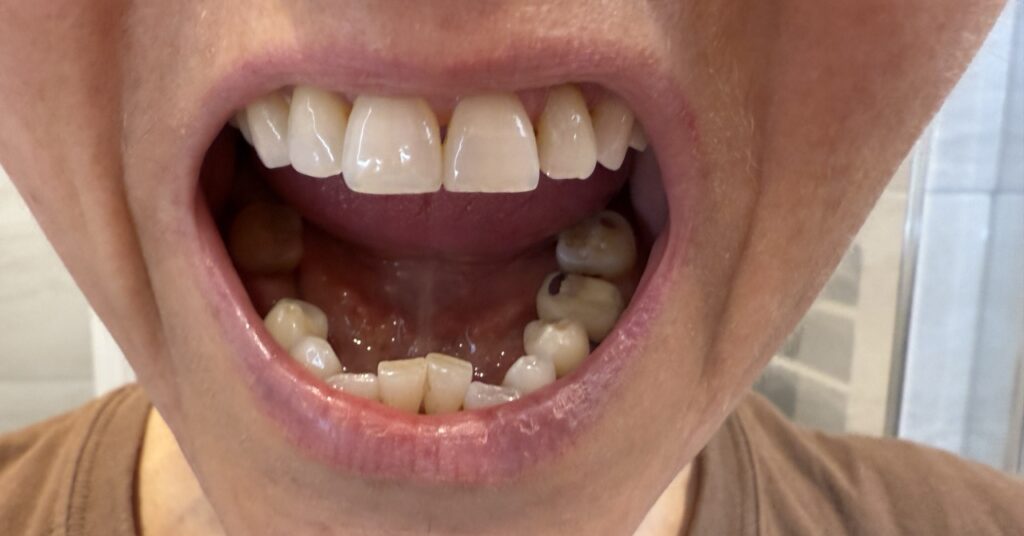
I will never forget the day I attended my dental practice for a routine checkup, where I entered with a glowing record of never having had any work done to my teeth in the form of fillings or other treatments related decay and wear-and-tear. This was likely the reason why I started to hyperventilate when the dentist told me that I needed five fillings in the molars at the back of my mouth. I was shocked and devastated, but deep I knew this was an inevitable outcome of my prolonged, futile battle with anorexia and bulimia.
I hated myself for causing so much damage to what I perceived to be the best physical feature I owned. I berated myself for prioritising my eating disorder above my teeth, and wished I could turn back the clock to make them perfect again.
As expected, my eating disorder loved the fact my teeth had been permanently damaged, because it gave it the power to escalate my black and white thinking and intensified my feelings of defeat and hopelessness in striving for recovery. What was the point in fighting when I had done everlasting damage to myself? I felt a complete failure once again, which sadly drove me further towards my eating disorder as I reached for it to cope and punish myself for neglecting my oral health.
Over the years I have undergone a lot of dental procedures, including fillings, root canals, crowns, and tooth extractions. But, despite the inconvenience, the emotional distress and anxiety (that was a direct bi-product of the entire situation), proved far more damaging than any financial losses.
What I have Learned & has Help me Move Forwards
Learning to challenge the difficult feelings of regret and self-hate over the permanent damage I have done to my once near-perfect set of teeth, has allowed me to move forwards in my continued recovery. Yes, the fillings, crowns, and tooth extractions can never be reversed, but what dentists can do nowadays is amazing, and I have realised I must not use it as a reason to punish myself, and it does NOT make me a failure.
Reaching a recovery has changed my life, and given me the gift of seeing my eating disorder for the vindictive, cruel, destructive disease it is, which gave me the strength to ignore it’s fictitious lies as it tried to keep me on side.
I may not have the perfect teeth, but I have a life free from the grips of an eating disorder. And I will not trade it for anything in the world.
Please refer to the video at the top of this page to find out more about the impact my prolonged battle with eating disorders has had on my pearly-whites.