How Distraction Helped Me
Throughout my life, I have tried and tested many different methods of dealing with difficult feelings and emotions. It took some time, but I eventually found what worked for me and learned to adapt and tailor these techniques to suit me best before adding them to my mental ‘toolbox’, which was accessible whenever I needed to challenge destructive thoughts, urges, and/or eating disorder behaviours.
Some people find coping strategies like relaxation and meditation very helpful tools, but these never worked for me, despite repeated attempts. I tried to practise clearing my mind, focusing on the moment and slowing down my breathing, but I could rarely switch off from overwhelming thoughts and anxieties that had the perfect opportunity to escalate and race through my mind as I sat or lay there trying.
The day I accepted that distraction was the most effective and positive way for me to manage my emotions and distress was a key turning point in my being able to move forwards with my treatment and build a life for myself. I stopped wasting time practising methods that were proving ineffective, which took the pressure off in terms of thinking I had to master the art of mindfulness and meditation so I could successfully breathe myself into a state of relaxation whenever I needed to, because deep down I knew that was not going to work.
Throughout my teens, I managed to cope by engrossing myself in my studies, where I focused on getting straight A’s to prove I was a success. Anything less was personally unacceptable and would leave me feeling a failure as a human being. But despite schoolwork serving as an effective distraction, it allowed me to both live in denial and conceal my eating disorder from those around me.
Once I had left school, work became my new distraction and primary focus. But unfortunately, my eating disorder had other ideas and escalated to the point that I was unable to function daily due to the mental decline caused by uncontrollable eating disorder behaviours and the physical effects on my body.
It was whilst I was in treatment that I began actively adopting methods of recreational distraction to help me cope with destructive thoughts and feelings. I learned new hobbies during sessions with occupational therapists and by joining various groups at my local mental health outpatient service. I was also fortunate to have the most amazing auntie, who introduced me to various crafts that she both taught and attended with me. Not only did this help add new skills to my bank of tools and coping strategies, but it also gave me the opportunity to build the most special relationship with my auntie, for which I am eternally grateful, and which is one of the best things to come out of my eating disorder and mental health journey.
Some of the skills and hobbies I first tried included things such as creative writing, drawing, and painting. Not only did these help me focus and deflect my mind from difficult thoughts, but they also served a secondary purpose in that they were very positive, powerful methods of me being able to express and process what was going through my mind, both in and out of therapy.
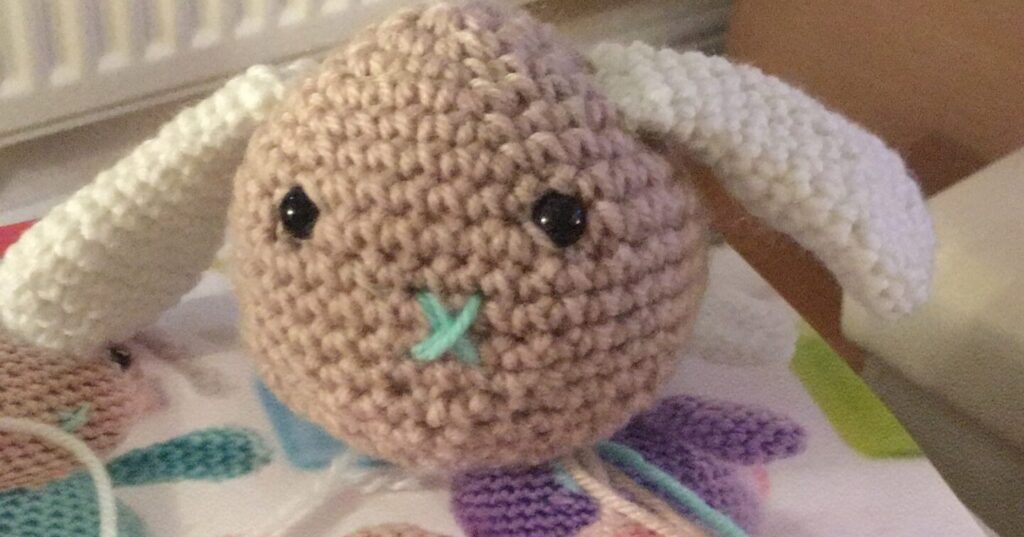
Learning different crafts like beading, knitting, card making, crochet, and pottery has been invaluable to my recovery and given me the ability to fight my ED and mental health challenges over the years, building a life for myself with things I never thought possible. I would often make things specially for a member of my family or a friend, giving me a purpose and an additional sense of accomplishment. And having a tangible creation at the end of every project boosted my self-worth, self-esteem, and left me feeling proud of myself.
Finding effective methods to cope with difficult feelings and emotions is different for each and every one of us. Listening to myself and opting for the things that were most helpful to me has played a big part in my fight against my eating disorder over the years and got me through life to reach that monumental turning point after my mum passed away, where my mindset changed and I was ready to put my eating disorder in its grave.
I had always been a people-pleaser trying to satisfy everyone else’s needs and demands, but listening to myself and following my instincts not only helped my recovery, it also boosted my confidence and self-belief, which my eating disorder had denied me for so long.
Today, distraction is still one of the most effective methods I use when coping with stress and anxiety, but what I have learned is that it is not about running away from my feelings — it is about giving myself the time, space, and support I need so I can face them safely.
What once seemed like such a simple coping strategy has turned out to be one of the most powerful weapons I have against my eating disorder. It carried me through the darkest moments when I felt like I was barely holding on, and now it helps me stay grounded, steady, and in control. If my journey has taught me anything, it’s that choosing healthy ways to manage your mind is not weakness or avoidance — it is strength, self-awareness, and proof that you are strong enough to fight back and refuse to let your struggles win.
Please refer to video above to see some of my creations that I have made using the different distraction techniques I have learned throughout my mental health battle and recovery journey.