Minnesota Study: Semi-starvation
Duration: 24 weeks
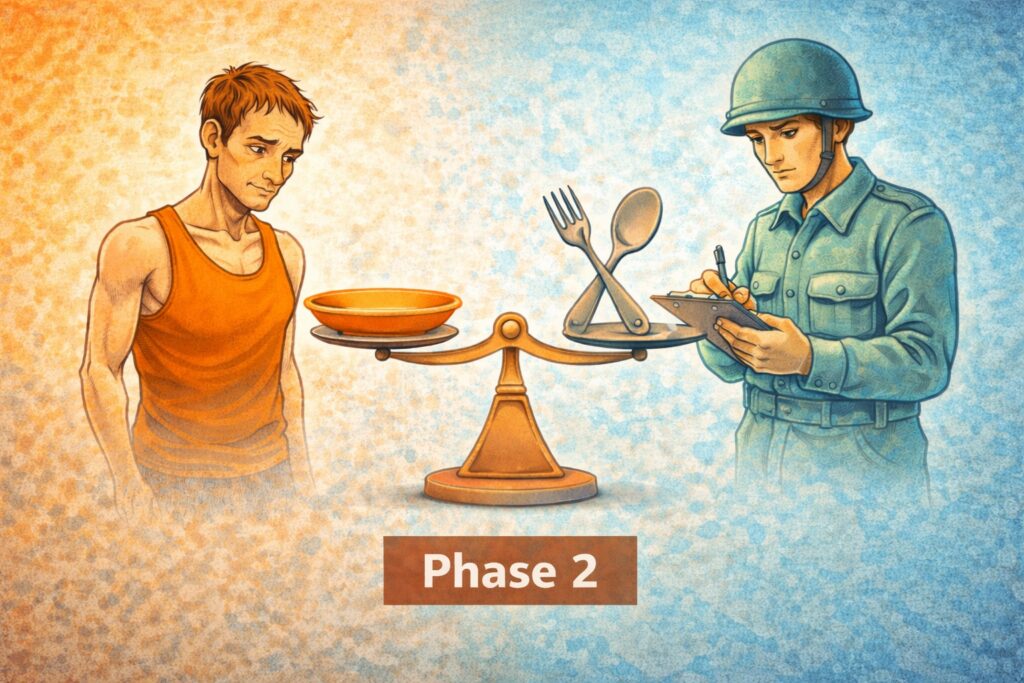
During phase two, the participants had their food intake cut by approximately 50% of what had been provided in phase one. Their daily meals were also reduced from three per day to just two — one in the morning and one in the evening. As well as the restricted nutritional intake, the subjects were required to walk a strict 22 miles per week to facilitate and maintain their weight loss, which was carefully monitored by researchers to ensure each man lost roughly 25% of his original body weight over the course of the semi-starvation period.
The volunteers did, however, have access to unlimited water and black coffee, and were each given a daily quota of chewing gum and cigarettes — items that researchers allowed because they were believed to help participants cope with hunger without significantly affecting the experimental results.
This phase lasted for around six months and produced dramatic physical, psychological, and behavioural changes. Many participants became preoccupied with food, developed ritualistic eating habits, experienced mood disturbances such as depression and irritability, and showed signs of social withdrawal. Researchers observed that even previously well-adjusted, psychologically healthy men began to display obsessive thoughts, emotional distress, and reduced concentration – findings that later proved crucial in understanding how starvation itself can generate symptoms often mistaken for personality traits or mental illness.
Observations and Results Broken Down
Physical Effects on the Body
Subjects presented with:
* Dizziness and fainting spells
* Cold intolerance & drop in body temperature
* Hair loss and brittle hair
* Dry, rough skin
* Slowed heart rate (bradycardia)
* Lowered blood pressure
* Reduced coordination and slowed reflexes
* Muscle wasting and loss of muscle mass
* Digestive problems (bloating, stomach pain, constipation)
* Decreased sex drive and hormonal changes
* Sleep disturbances despite exhaustion
* Weakened immune response and slower wound healing
My Personal Experience of the Physical Effects of Semi-Starvation
During periods of starvation, my body began to break down in ways that were uncannily similar to what researchers documented in Phase 2 of the Minnesota Starvation Experiment. I experienced frequent muscle spasms and sharp, crippling cramps caused by electrolyte imbalances from purging — pain intense enough to jolt me awake, yet never enough to stop my behaviours. When I was underweight, I couldn’t stay warm no matter what I did; even layered in clothes beside a heater, I felt chilled to the bone, just as starvation research shows happens when metabolism slows and circulation declines.
Exhaustion consumed me, but my eating disorder drove me to keep exercising, forcing my depleted body through punishing workouts while running on nothing but adrenaline. I developed many of the same physical symptoms recorded in the study’s semi-starvation phase: hair loss, low blood pressure, digestive problems, and slowed reflexes. I also experienced frightening episodes of light-headedness and fainting, where my vision darkened and sound faded into silence as I collapsed, terrified my body was shutting down.
Violent heart palpitations became another warning sign, triggered by electrolyte disruption from purging — a dangerous imbalance known to strain the heart and, in severe cases, become life-threatening. Even then, the illness kept me trapped, overriding pain, fear, and every signal my body sent to stop.
Mental & Psychological Problems
Subjects presented with:
* Hysteria
* Severe depression and persistent low mood
* Irritability and anxiety
* Apathy and loss of interest in previously enjoyed activities
* Obsessive thoughts about food
* Development of food rituals and rigid eating behaviours
* Binge-eating episodes (in some participants)
* Poor concentration and mental clarity
* Indecisiveness and slowed thinking
* Loss of motivation and reduced initiative
* Emotional numbness in some individuals
* Mood swings and emotional instability
* Increased rigidity in thinking and behaviour
* Hypochondriasis (preoccupation with health concerns)
* Psychological Distress
(Four subjects were removed from the study requiring hospitalisation due to severe psychological decline)
How Semi Starvation Affected my Mental Health
During the depths of my eating disorder, my psychological state deteriorated in ways that felt frighteningly parallel to what was documented in Phase 2 of the Minnesota Starvation Experiment, where prolonged semi-starvation caused profound mental and emotional disturbance in participants. I became severely depressed and began harming myself, while my purging escalated to extreme. Like the men in the study who became consumed by food-related fears and distorted thinking, I developed an intense terror of eating and a growing belief that I was poisoning myself when I did.
My thoughts grew increasingly obsessive and irrational. I felt relentless self-hatred and became convinced I was undeserving of life itself, weighed down by unbearable guilt and shame. The drive to lose weight as quickly as possible took over my mind completely, just as starvation research shows fixation intensifies when the brain is deprived of nourishment. Eventually, even foods with almost no calories – like vegetables or salad – began to feel threatening. I needed my stomach to feel empty and hollow, which led me to abuse laxatives, and I became paranoid about fluid retention, turning to diuretics to try to manage the symptom and reduce the figure on the scales.
In the same way the Minnesota subjects developed compulsive, food-related rituals and distorted beliefs under starvation, my behaviours became increasingly warped and desperate. I even drank acidic liquids like vinegar and lemon juice, convinced they could burn away the ‘badness’ inside me. Looking back, it is clear that these thoughts were not personal failings or choices, but the psychological consequences of starvation – the mind mirroring the same biological distress that I was putting on my body.
What this comparison shows is that eating disorders are not quirks, phases, or personality traits – they are powerful, toxic illnesses that distort perception, emotion, and reasoning. Just as the study proved starvation can radically alter the mind of otherwise healthy individuals, my experience shows how an eating disorder can hijack a person’s thoughts, identity, and sense of reality – until nourishment, treatment, and recovery start to give them back.
Personality Changes
Subjects presented:
* Sluggish
* Demotivated
* Irritable
* Obsessive over food (it became their main focus in life)
* Performing rituals when eating like cutting food into tiny pieces
* Stealing food-related items to satisfy their cravings
* Loss of sense of humour
* Decreased libido and reduced romantic interest
* Social withdrawal and isolation
How my Personality was Affected During Semi-starvation
During periods of semi-starvation, my personality began to shift in ways that closely mirrored the behavioural changes recorded in Phase 2 of the Minnesota Starvation Experiment, where previously stable, emotionally balanced men developed striking alterations in mood, temperament, and interests. My mind became dominated by food — I fantasised about it constantly and even dreamed about it — just as participants in the study reported obsessive food thoughts and fixation that crowded out all other interests.
I lost motivation for anything unrelated to food or weight, and everyday stimulation became harder to tolerate. Noises grated on me, small frustrations felt overwhelming, and I became easily irritated. Like many of the Minnesota subjects, whose patience and emotional resilience sharply declined under starvation, I found my tolerance shrinking. But instead of expressing this outwardly, I turned it inward. I channelled irritation and distress into eating disorder behaviours such as binge–purge cycles or punishing exercise, trying to conceal my turmoil because I feared being seen as a bad or difficult person.
My behaviour grew increasingly irrational and disturbing, and I felt trapped in cycles of desperation, frustration, and anger toward myself. This echoed the study’s findings that starvation can profoundly alter personality, increasing emotional volatility, rigidity, and compulsive tendencies. The changes felt confusing and frightening, as though my identity was being slowly replaced by something harsher, narrower, and far less recognisable.
What stands out most, in hindsight, is how precisely my personality shifts reflected what researchers observed in healthy volunteers subjected to starvation. The comparison makes one thing clear: these were not character flaws or moral failures, but predictable psychological consequences of deprivation. Starvation doesn’t just weaken the body — it reshapes temperament, perception, and identity itself, until nourishment begins to restore what the illness took away.