Accepting you need help – why is it so important?
Eating disorders are complex illnesses that can escalate at an alarming rate, becoming ingrained before you know it. Going down this path was the worst thing I ever did, and I plead with anyone struggling with obsessive or negative behaviours around food, weight, and/or shape to seek help as soon as possible.
We all have to eat to live, which is one of the primary reasons eating disorders can consume your life within a fairly short period of time.
Mine became an addiction and a habit. It was the first thing I thought about in the morning and the last thing at night. It was a constricted, desperate way to live, and sadly it became the centre of my world, around which I built my life. I have seen so many others do the same.
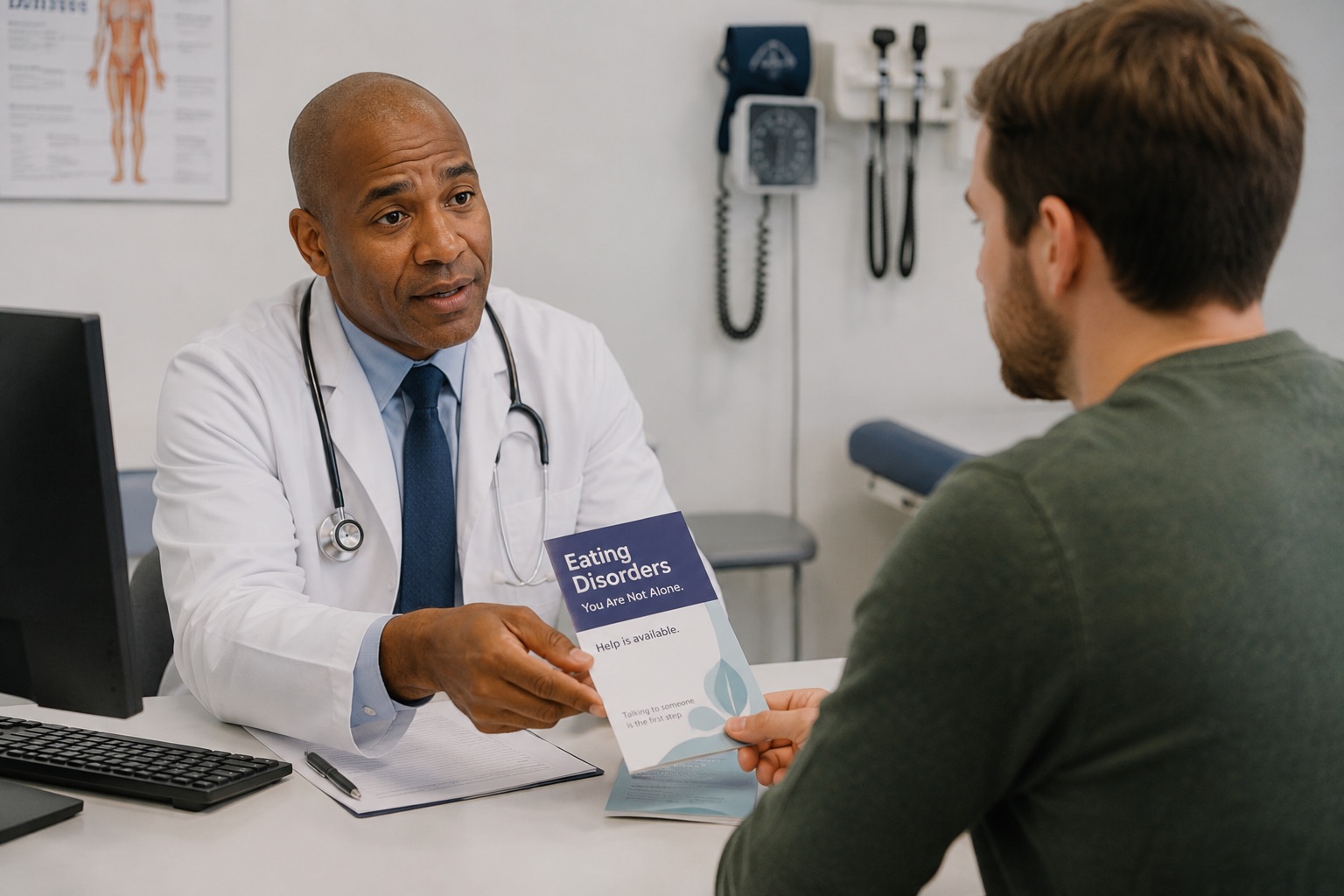
Due to the nature of eating disorders, the earlier a person receives support and treatment, the greater the chance of successfully challenging and reducing symptoms, allowing them to reach recovery sooner rather than later. I urge anyone struggling to do this so you can move on with your life, free from the constraints forced upon you by these destructive diseases, weighing you down and limiting your world.
In contrast to what your eating disorder may be telling you—and what mine told me—you do not need to get worse before you get better. It does not mean your food struggles and body issues are not valid or serious if you are in the early stages of an eating disorder or are not presenting a certain way physically. I personally feel, in many ways, it is more difficult to challenge an eating disorder earlier on because it can be a time when an ED appears to offer more positives, reducing the want to change.
In the early stages of my anorexia and bulimia, I was coasting along naively in a ‘honeymoon phase’, so to speak. I didn’t realise exactly what my eating disorder could, and would, become. In reality, I knew what I was doing was wrong, but I lived in a state of denial, scared to let ‘IT’ go. If I am being honest with myself, I was internally screaming for help, silently praying that someone would notice, challenge me, and give me the permission and encouragement to seek help.
Could things have been different?
Looking back, I always wonder whether things might have been different if I had received professional help and a diagnosis when I turned 13. Unfortunately, back in 1995, eating disorders weren’t recognised in children, so I was sent away from the GP with a pack of antidepressants, no diagnosis, and no treatment.
As a result, I carried on with life, quietly struggling as I developed full-blown bulimia nervosa. I hid it from those around me because of the shame and guilt, and because I did not want to worry my loved ones. I became hooked and dependent, so much so that my eating disorder became my identity.
Going down the purging anorexia and bulimia route meant I spent years trying to force my body to be something it was not, and never was going to be. Genetically, I was not built to be naturally thin. I needed to accept that and accept myself for who I was so I could move forward with my life. But to do this, I needed support and professional help to challenge my perception of what I thought a socially acceptable, perfect body should be, and to embrace and value my own.
Instead, I wasted years of my life going around in circles with anorexia and bulimia, engaging in some of the most degrading and dangerous eating disorder behaviours. I now see just how pointless it all was and what a total waste of my time, energy, and money it became. I can never reverse any of it, and that is something I have lived to regret.
The Reality
What I came to realise in terms of my body and striving to be ‘thin,’ was that nothing was ever going to be good enough because the goal posts would forever change. What I once thought would make me special and unique, left me lonely and miserable.
My eating disorder and my size meant everything to me, but not to anyone else. Those around me that once showed me concern and constant care and attention lost interest, because life goes on doesn’t it? Exactly as it does when a person passes away.
One breakthrough came the day I realised I was being—and would continue to be—left behind in life as I poured everything into my eating disorder and my desperate bid to be thin.
I realised that, if I continued, I would spend my days relentlessly competing against others with eating disorders, striving to be better than they were in terms of being fragile and physically unwell.
But I was never going to be the ‘best’ at having an eating disorder because the so-called ‘best’ have, heartbreakingly, succumbed to the illness and are no longer on this earth. I have seen it many times myself, and it tears me apart to think about the lovely individuals I once knew and how their lives were cut short by such a futile and devastating illness. This is yet another motivation behind my Munch and Mend project.
In a nutshell, what I am trying to say is this: please seek help and advice as soon as possible. Accept the reality that your symptoms are serious and valid, whatever the stage or physical presentation. Don’t be fooled into thinking you cannot have an eating disorder because you don’t fit the so-called mould that exists in your head or in society. Eating disorders can affect any one of us at any time in our lives. They also come in all shapes and sizes, and across an array of different diagnoses.
If you are worried about approaching a professional, perhaps you could open up to a friend, teacher, colleague, or family member. Sometimes a little extra support and encouragement to book an appointment is needed; I know it was for me.
If you are at university or college, many campuses have counselling and wellbeing services that you can approach for support and advice. I urge you to do this and get the help you need as soon as possible.
I so desperately want others to join me on this side of recovery because I didn’t realise how good it could be, and I want this for you.
Please seek help, never give up the fight, and join me in recovery. 🧡🩵
For further info & advice